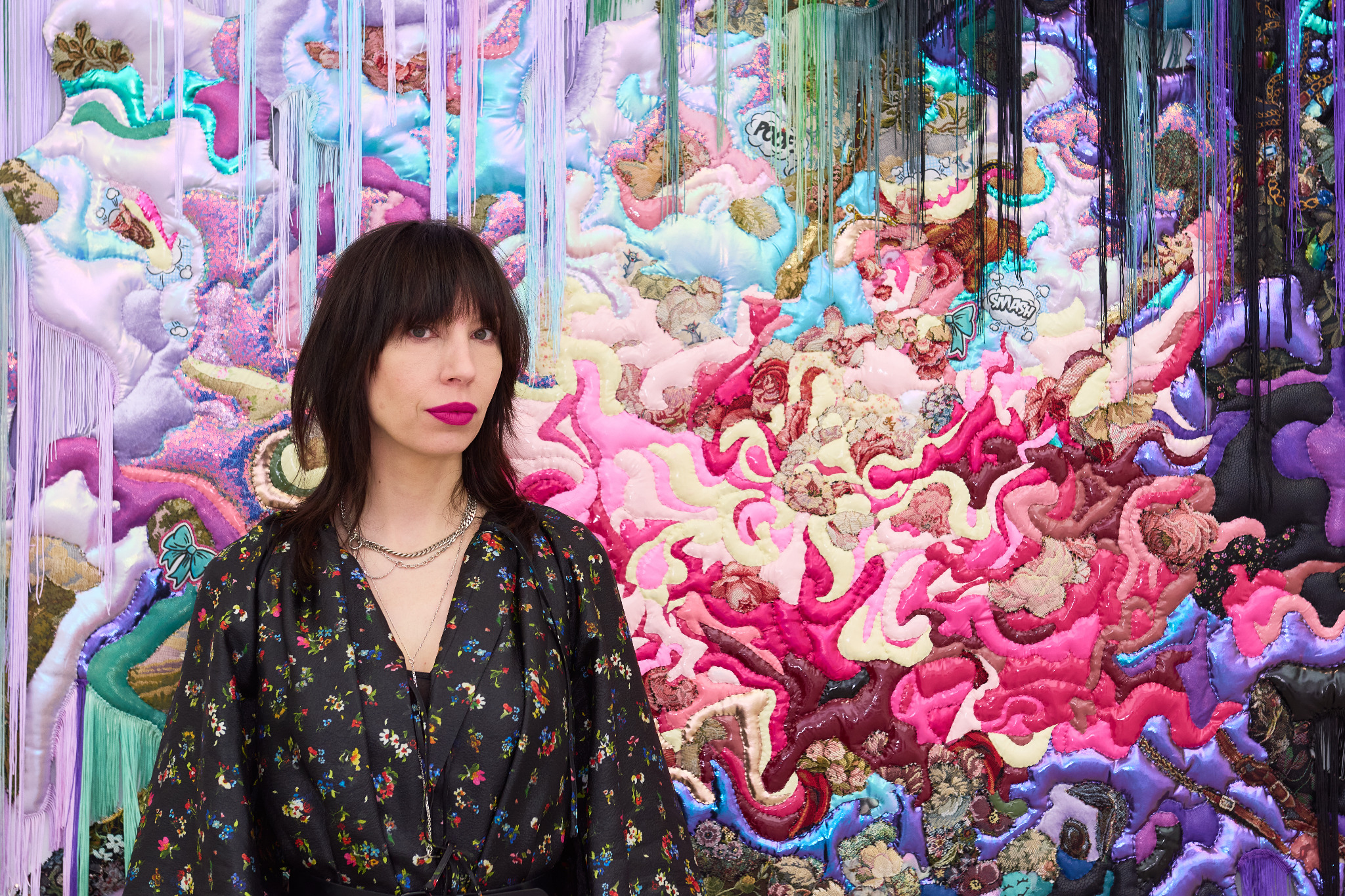
At first glance, the work of Anne von Freyburg seems to offer pure pleasure: colour, shimmer, softness and an almost overwhelming abundance of fabric. Look longer, however, and that pleasure begins to shift. Beneath the seductive surfaces are questions about who has been allowed to define beauty, what art history has dismissed as merely decorative, and why certain materials have been valued less than others. Born in the Netherlands and based in London, von Freyburg studied fashion design before completing an MA in Fine Art at Goldsmiths. She now constructs paintings and wall installations from embroidery, tapestry, synthetic textiles and cascading fringes, often reworking the visual language of Rococo masters such as Fragonard. Her pieces refuse the old division between painting and craft, the beautiful and the grotesque, the playful and the political.
For Art-onomi, we spoke with her about seduction, femininity, excess, abstraction and the unexpected freedom of making something simply to give pleasure.
The conversation
01. Your work often begins with images that were originally created within very different systems of power, beauty and desire. When you appropriate an Old Master painting, do you feel that you are correcting something in the image, arguing with it, or allowing it to become something it could never have been in its own time?
That depends on the painting and the subject. I’m very aware of the time that it has been made in and also for whom it was made. All that influences how I approach the work. There is always humour when I use criticism. The paintings are vehicles to talk about this day and age, which has parallels with the Rococo in my opinion.
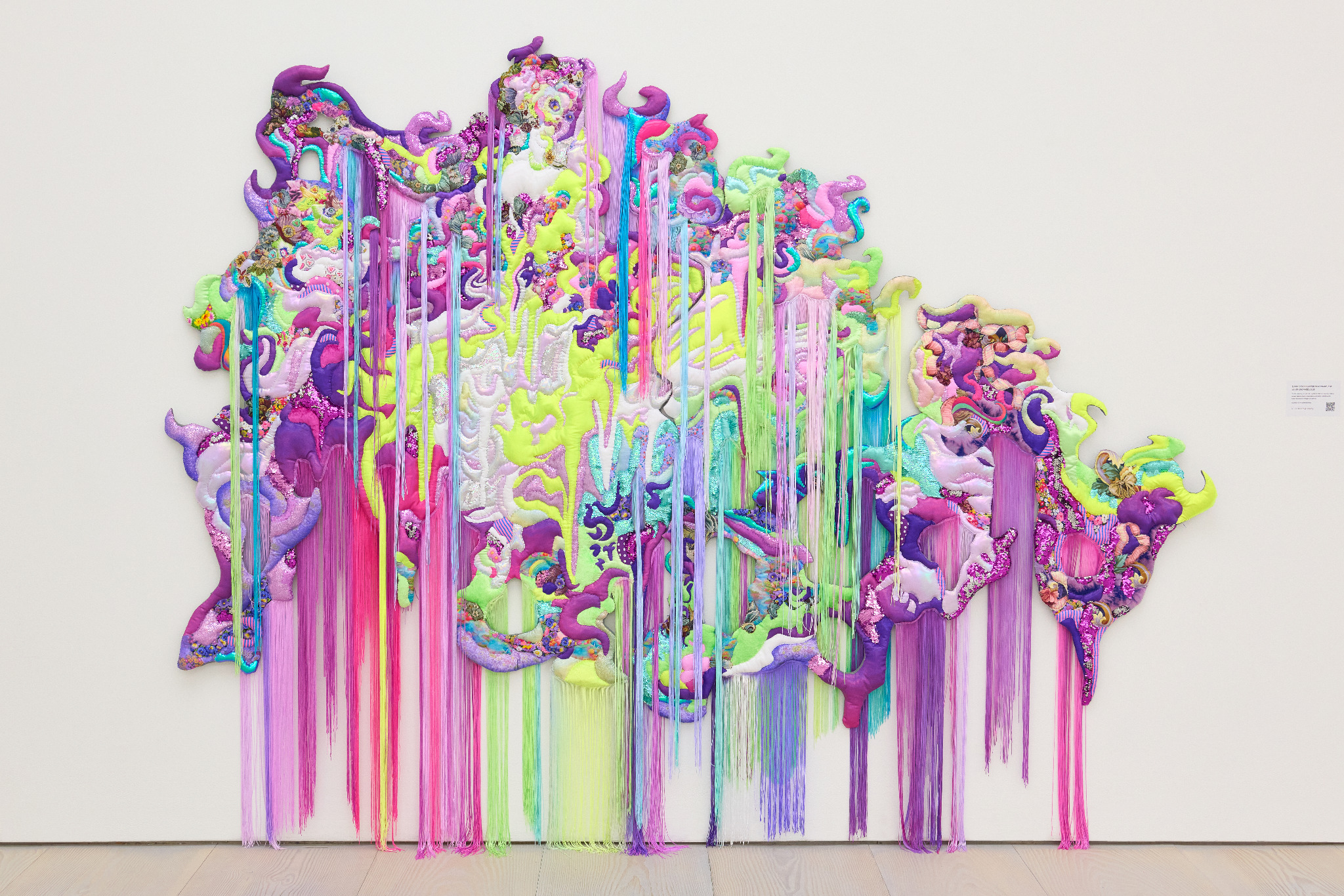
Anne von Freyburg, Sunny Side Up (After Fragonard, The Lover Crowned), 2025. Textile painting, mixed fabrics and hand embroidery, 223 × 280 × 2 cm. Photography: Pasquale Viglione. Courtesy of the artist.
02. There is something interesting in the fact that your works are visually seductive before the viewer necessarily understands their critical dimension. Do you ever think of seduction itself as a form of power — a way of making someone stay with an image long enough for it to become uncomfortable or complicated?
Yes, the seductiveness is part of the whole concept. It’s a way to draw people in, but it also says something about how we can be blinded by it. It’s also something that is ascribed to women, and not always in a positive way. In my work, I play with these different opinions about seduction without any judgment.
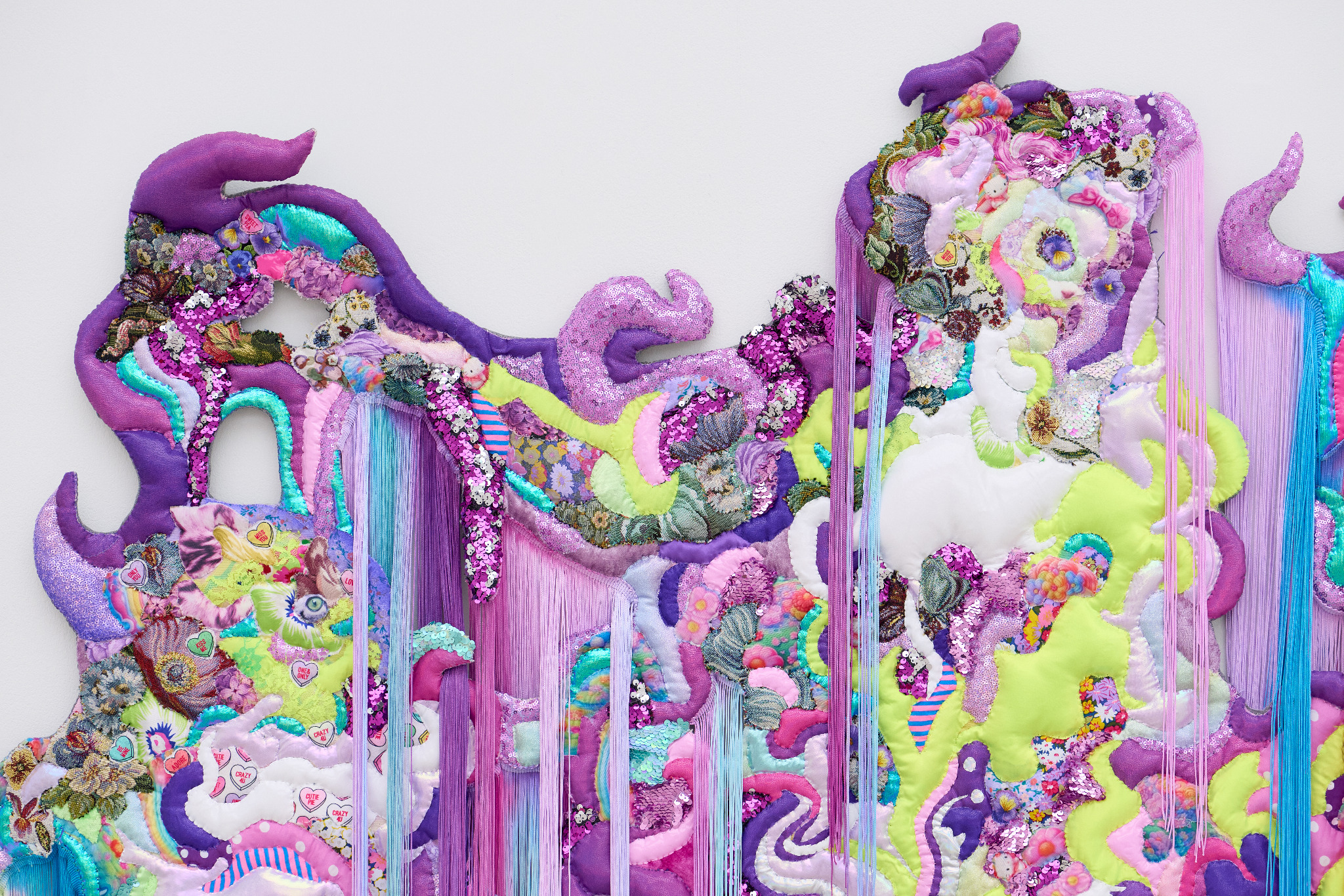
Anne von Freyburg, Sunny Side Up (After Fragonard, The Lover Crowned), 2025 (detail). Photography: Pasquale Viglione. Courtesy of the artist.
03. You have spoken about reclaiming what has historically been dismissed as feminine, decorative, excessive or “pretty”. But once those qualities are reclaimed and consciously used as strength, can they ever become restrictive again? In other words, can femininity become another kind of expectation even when it is self-defined?
As Simone de Beauvoir wrote, ‘One isn’t born a woman but one becomes a woman’. Femininity and gender are societal constructions. Nowadays most femininity is self-defined. But when is something self-defined? Just think about the whole trad-wife movement, which is self-defined and reclaimed femininity, but a very regressive one. I think it’s important to ask oneself if it’s really self-defined or if there are pressures or expectations coming from the outside. Even though my work is critical and has lots of layers of meaning, it’s also there to encourage people to feel free to be themselves.
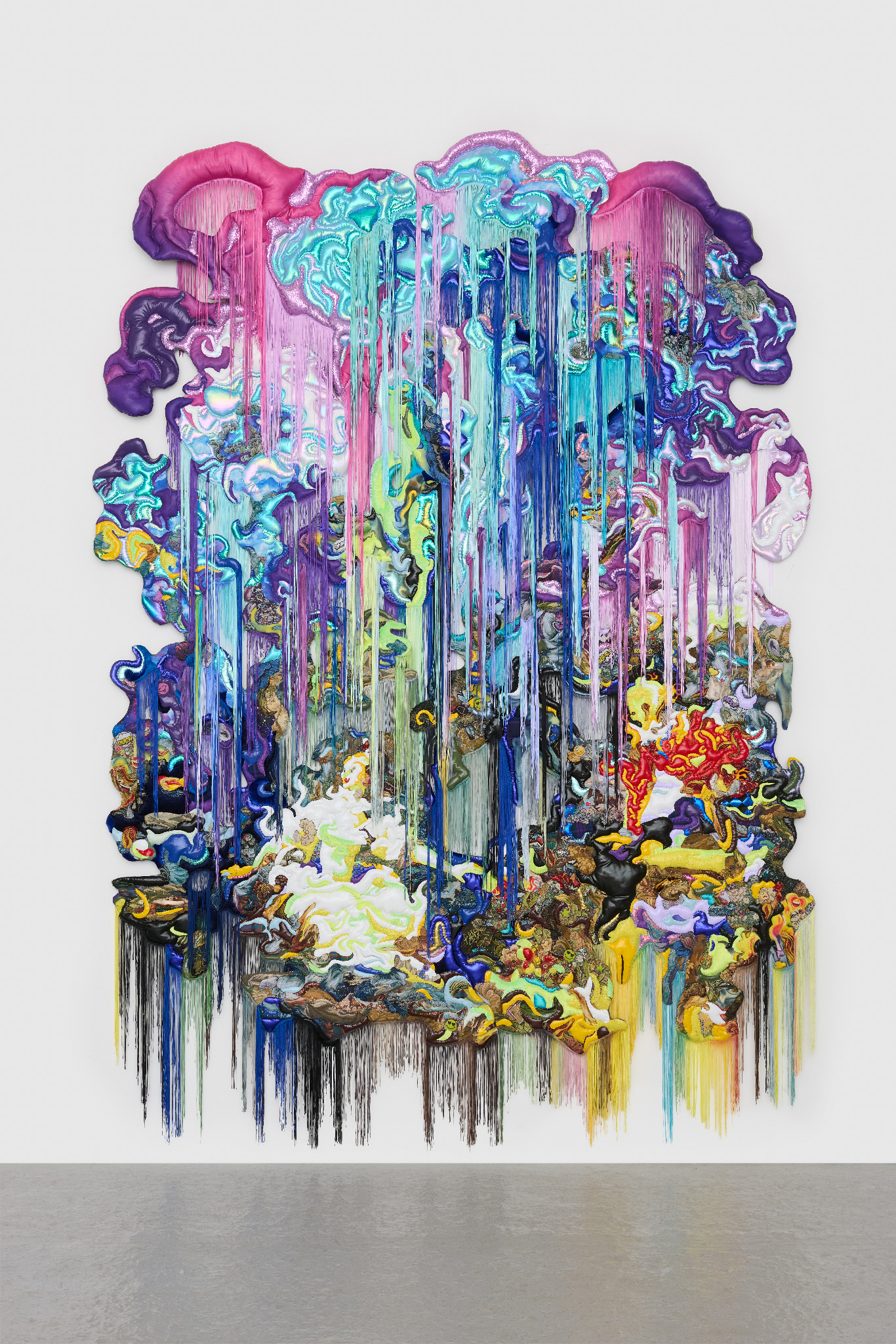
Anne von Freyburg. Textile artwork, mixed media. Photography: Pasquale Viglione. Courtesy of the artist.
04. Your works often sit between attraction and excess: beautiful materials, ornament, shine, colour and softness accumulate until they almost become overwhelming. How do you know when abundance has reached the right point — and when beauty begins to collapse under its own weight?
There is a point where there is just nothing more I can add, when the work feels resolved and it becomes weird and a bit sickening even. I’m not looking for embellished beauty or balance; I want to feel the overwhelm and the grotesqueness of it.
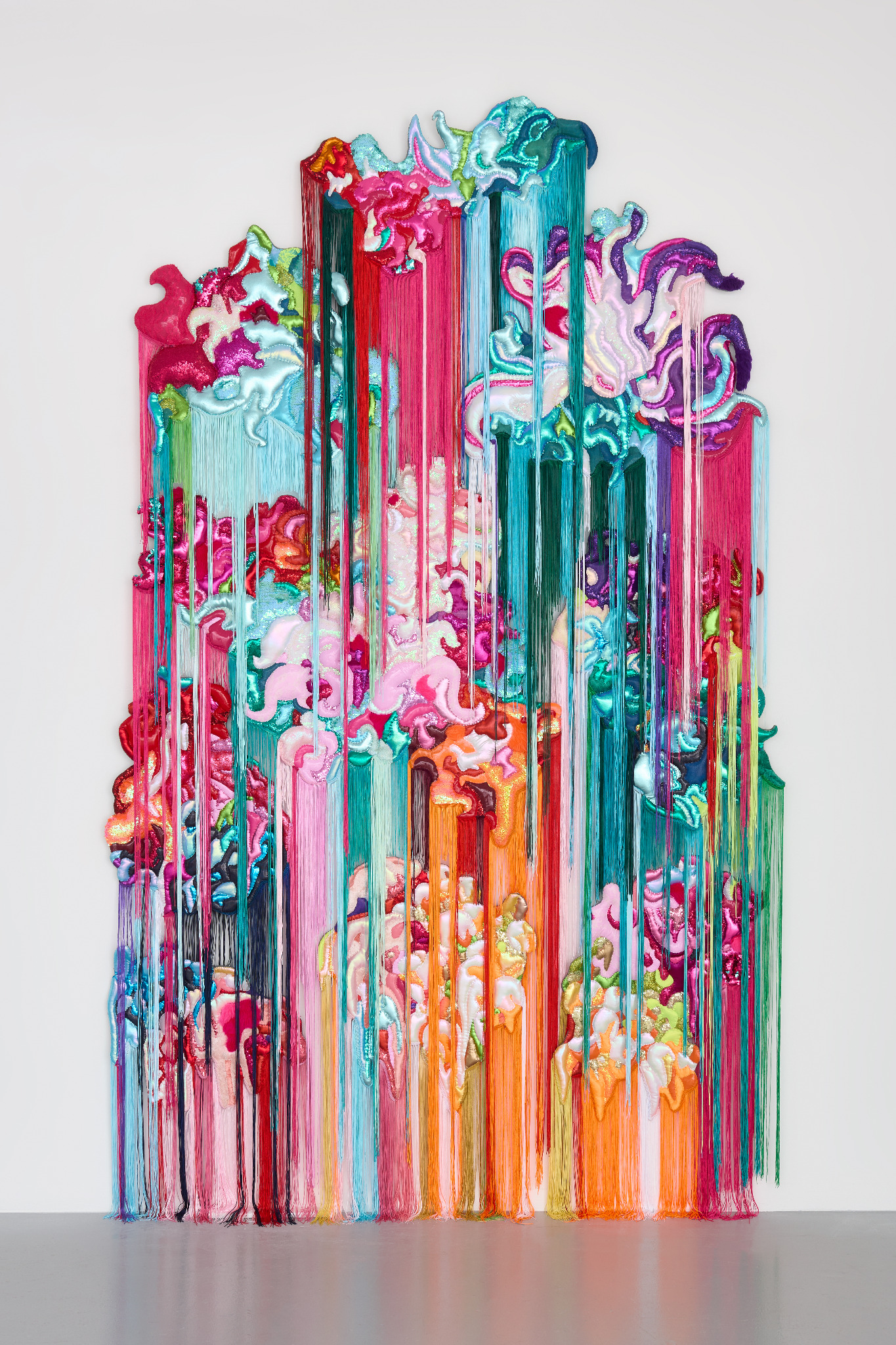
Anne von Freyburg. Textile artwork, mixed media. Photography: Pasquale Viglione. Courtesy of the artist.
05. Textile carries an intimate relationship with the human body: we wear it, sleep in it, sweat into it, inherit it and sometimes keep it because it belonged to someone else. Does that physical and emotional memory of fabric matter to you when you use it in works that are also engaging with bodies painted centuries ago?
I use fabrics more as a reference to our culture, social and historical background. An ornament, fabric or colour can be considered as kitsch in one time period and in another seen as edgy and hip. I am particularly interested in blurring the lines between high and low art, cheap and luxurious, craft and art. For instance, I repurposed tapestry wall-hangings from the 70s which I combined with painting techniques to evoke a dialogue between painting and tapestry. I choose these Rococo-style tapestries for their stereotypical ideas of innocence and femininity, which I challenged by adding black BDSM-inspired, lacquer faux-leather to give some kinkiness to all its sweetness. When using a mix of fabrics like woven tapestry, snake print, lace, fake leather and other fashion fabrics, I can also make a link to the present day. By being unapologetic in my use of rich fabrics, I am pushing against the accepted norms of fine art and at the same time being mindful and critical about fast fashion. My use of textiles is not only a conceptual way to make a statement about craft and its feminine associations, but I also want to reveal their artistic possibilities and material qualities: that all materials are equally important and permissible to make art with.
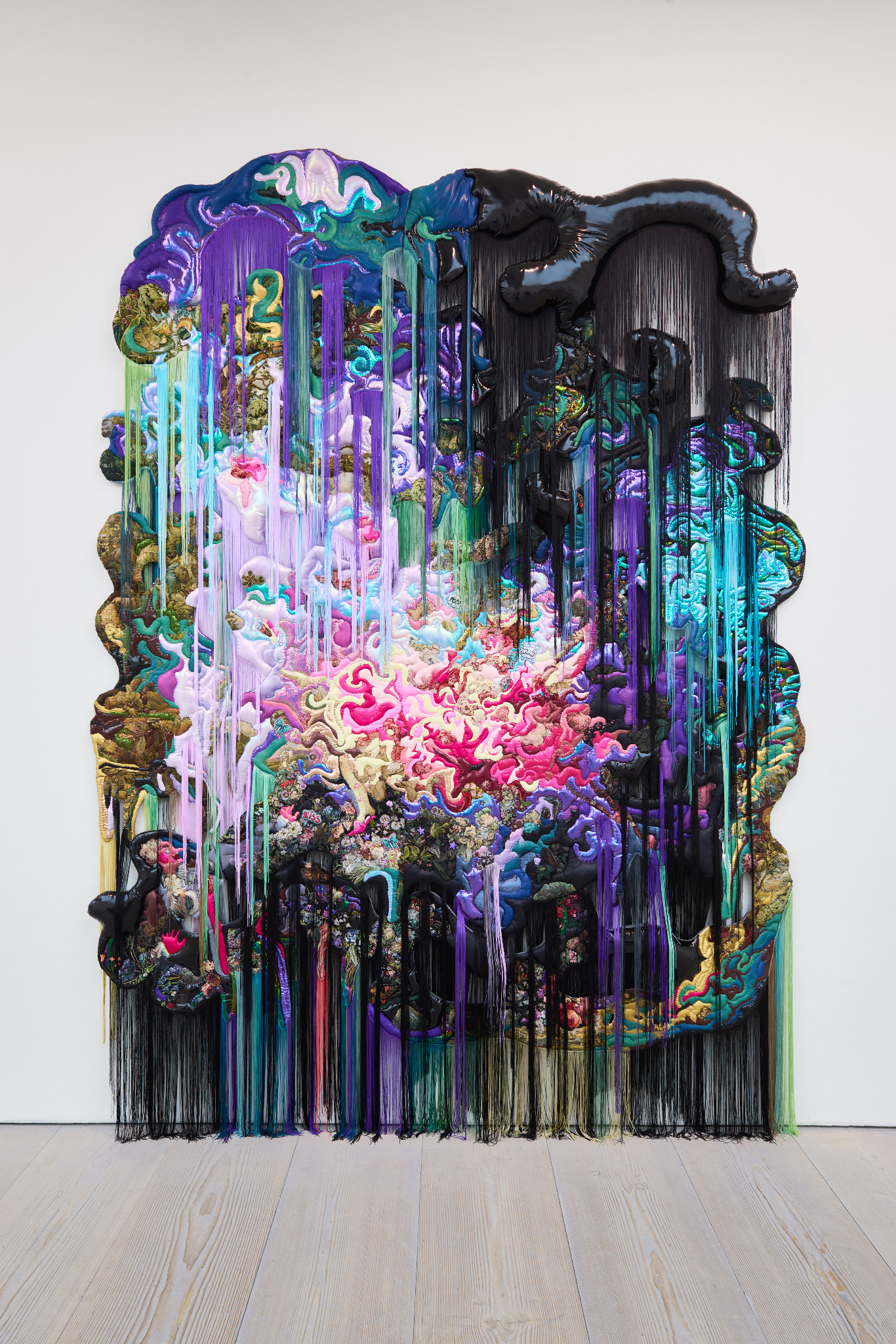
Anne von Freyburg, In Flight Mode (After Fragonard, The Swing), 2026. Textile wall installation, mixed fabrics, sequins, embroidery and tassel fringes, 350 × 270 cm. Photography: Pasquale Viglione. Courtesy of the artist.
06. You remove, obscure or destabilise parts of historical images, but you rarely erase their identity completely. How important is recognisability to you? Is there a particular moment when an image becomes more interesting because the viewer can almost recognise it, but not entirely trust what they are seeing?
It is not really important that the viewer recognises the original work. I can make this clearer in the title, for instance. With the floral paintings, the work becomes more abstract than when I repurpose a portrait or scenery; this is, of course, because of the subject. In general, I prefer it when one can oscillate between representation and abstraction. The materials and the technique make the image harder to read as well, and I do want to keep the dialogue between the original and my interpretation of it.
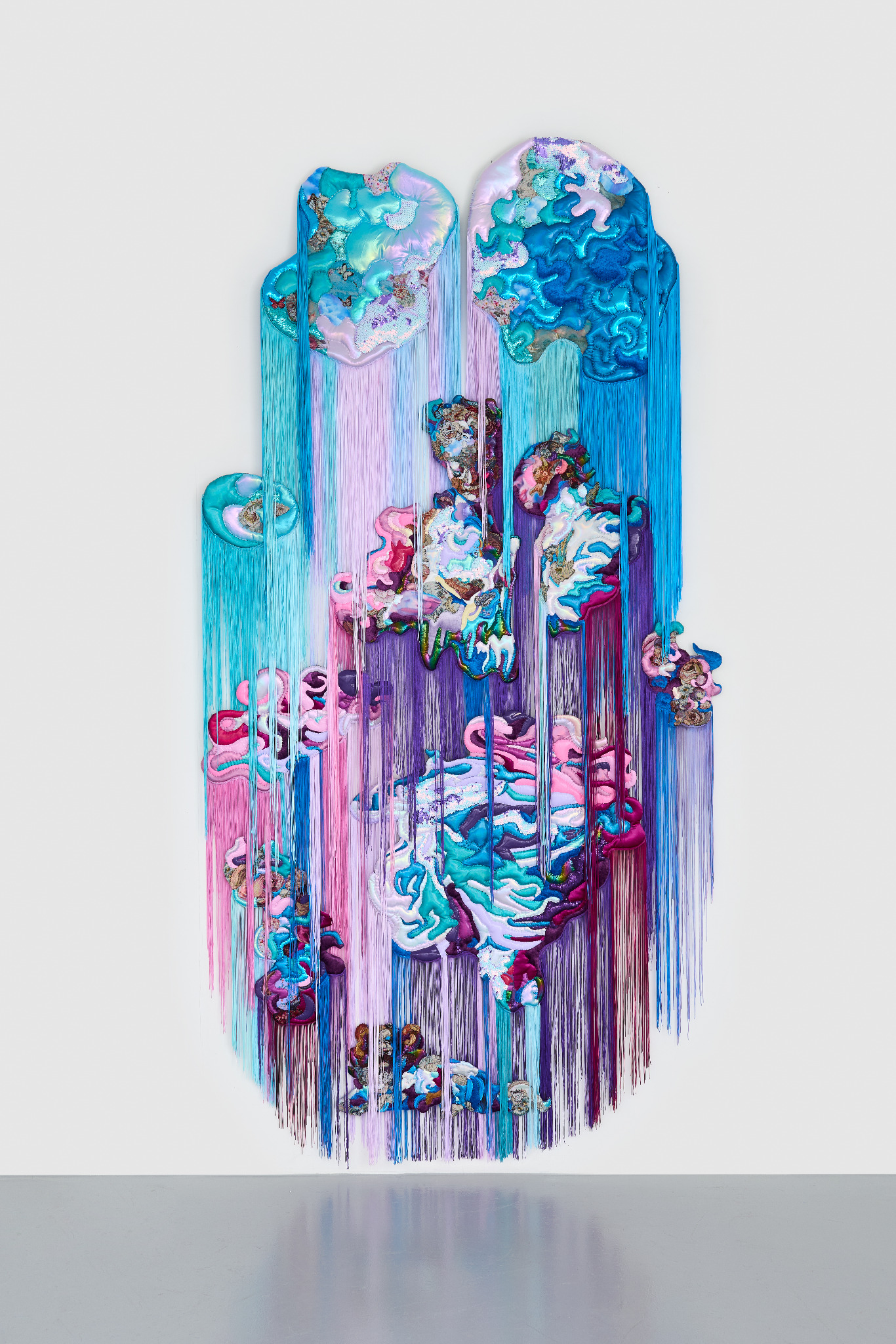
Anne von Freyburg. Textile artwork, mixed media. Photography: Pasquale Viglione. Courtesy of the artist.
07. Much of Western art history has transformed women into images to be looked at. Your work gives those images material presence — thickness, weight, texture, even something approaching a body of their own. Do you think materiality can change the balance of power between an image and the person looking at it?
This is something one should ask the viewer, but for me it does. A painting is something I can escape into, whereas a sculpture or textile artwork makes me feel present. It’s a more physical experience where I’m part of the work instead of only a spectator.
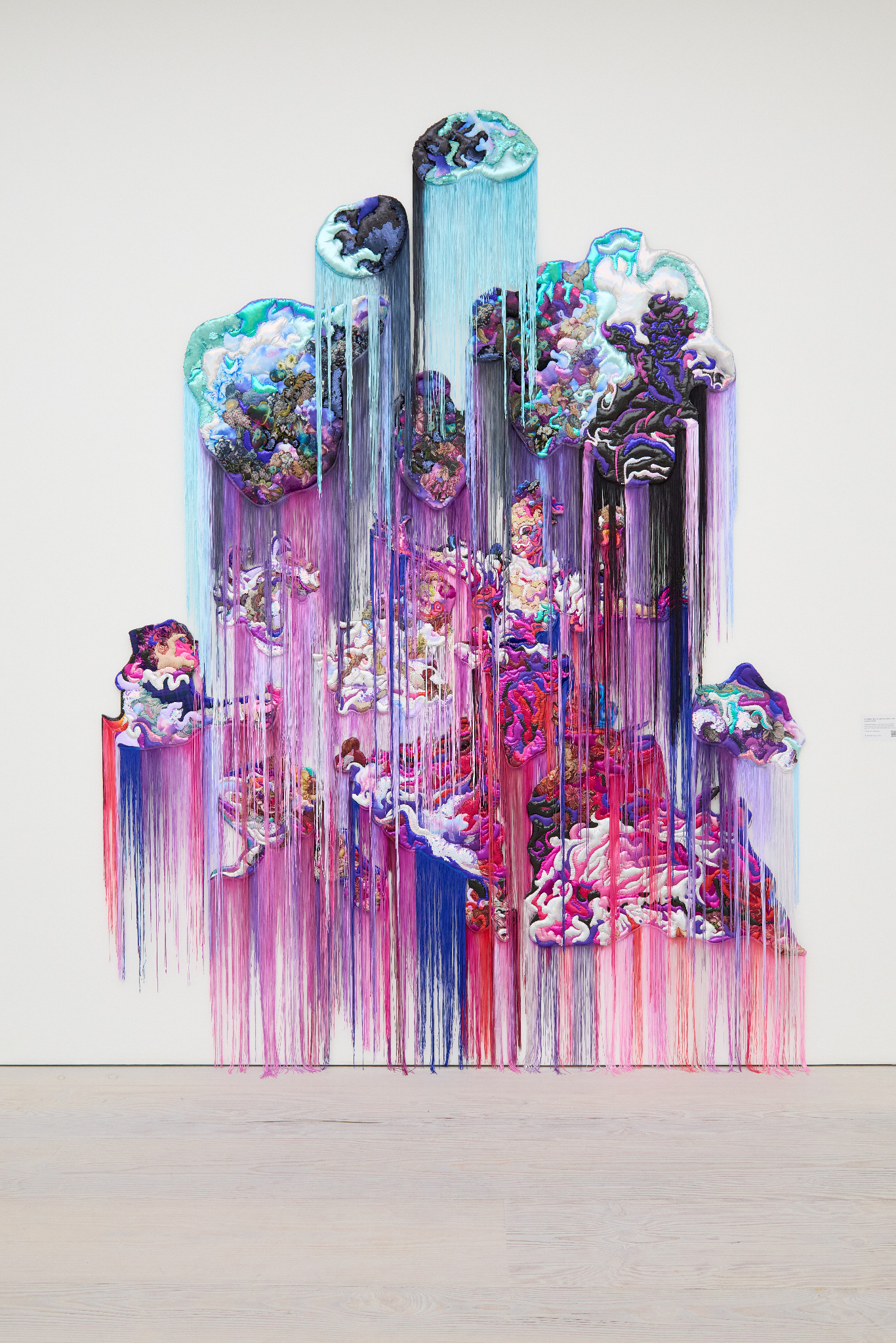
Anne von Freyburg, Electric Feel (After Fragonard, The Pursuit), 2025. Textile wall installation, mixed fabrics and embroidery, 350.52 × 269.24 cm. Photography: Pasquale Viglione. Courtesy of the artist.
08. Your recent floral works seem to move away from the human figure while still dealing with sensuality, desire and gender. Do flowers give you a kind of freedom that the female body does not — precisely because they can suggest sexuality without having to represent a specific body?
Yes, it gives more freedom, and formally it does something different when shapes become more abstract. It’s much less about the subject and more about the materiality, shape and colour of the piece. The only thing with abstraction is that it engages even more with the decorative element in the work, which is another interesting challenge. Here I think of Frank Stella’s maximalist work and his idea that the decorative could be weaponised to save abstraction from becoming boring.
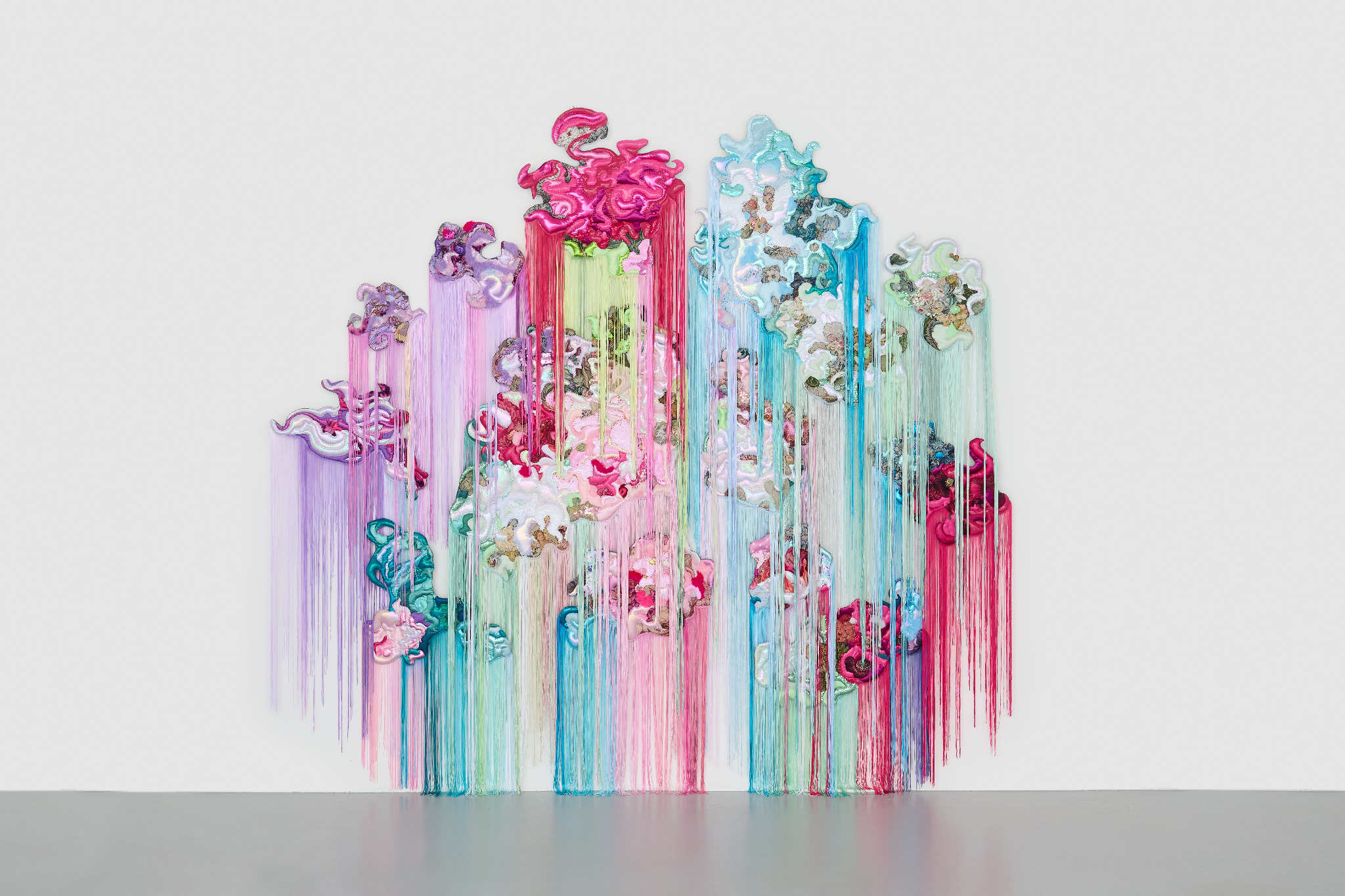
Anne von Freyburg. Textile artwork, mixed media. Photography: Pasquale Viglione. Courtesy of the artist.
09. You trained in fashion before moving more fully into fine art. Fashion is often treated as something temporal, seasonal and destined to disappear, while painting has historically been associated with permanence. When you bring fashion fabrics into works that enter galleries and collections, do you ever think about that collision between the temporary and the supposedly permanent?
I did study fashion design at ArtEZ in Arnhem before doing my master’s in fine art at Goldsmiths, but I never worked in the fashion industry. I was more interested in fashion as an art form than in designing clothes. When making work, I don’t think it has to exist forever, but I know that most of the fabrics could be replaced in time. One can compare it with collage and the use of printed media. They are signs of our time brought together to give a different outlook and perspective on modern life and culture. I couldn’t say the same things with painting as with the materials that I use. Also, I’d like to argue that not all fashion is seasonal; it’s very much displayed and collected by museums as well—The V&A Museum in London or The Metropolitan Museum in NYC, to name only a few.
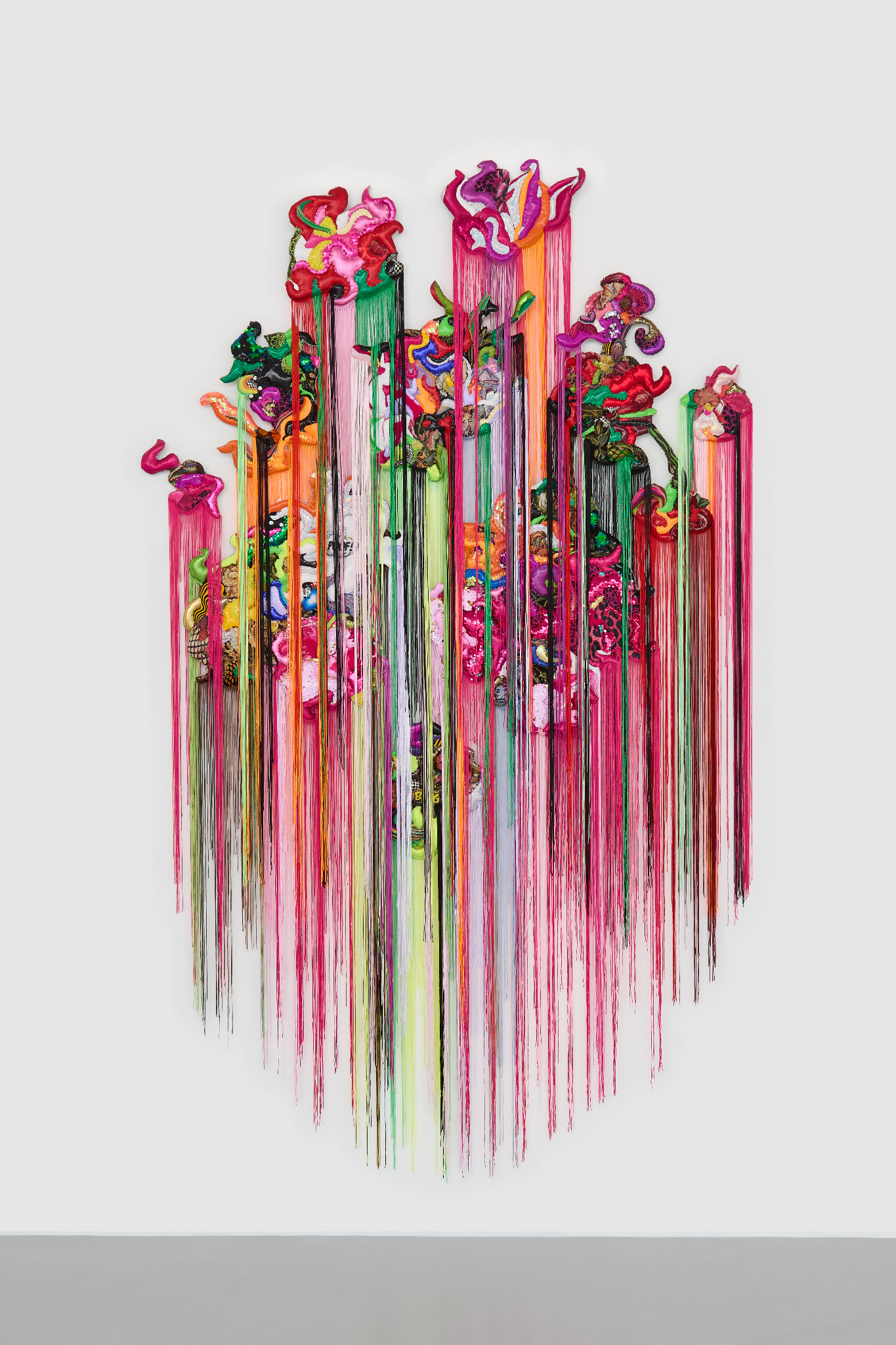
Anne von Freyburg. Textile artwork, mixed media. Photography: Pasquale Viglione. Courtesy of the artist.
10. If someone encountered your work without knowing anything about Rococo, feminism, textile history or the hierarchy between art and craft, what would you still hope they could understand — or perhaps simply feel — through the work itself?
I hope they get a feeling of joy and pleasure from the work.